
How Do I Know If I Need Counselling?

It's one of the most common things people say when they first get in touch with me: "I'm not sure I need counselling - other people have it much worse."
I hear it a lot. And I understand why. There's a tendency to measure our own struggles against a kind of invisible threshold, as if therapy is something you only deserve when things get really bad. But that's not how it works, and it's not a helpful way to think about it.
So if you've been wondering whether counselling might be for you, here's a more honest way to think about it.
You don't have to be in crisis to come to therapy
Most of the people I work with in Torquay aren't in crisis. They're not at rock bottom. They're functioning - going to work, managing their relationships, getting through the day - but something feels off.
Maybe they've been carrying the same weight for a long time and it's starting to feel heavier. Maybe a pattern keeps repeating and they can't quite figure out why. Maybe they've been through something and feel stuck, even though they thought they'd moved on.
That's enough of a reason. You don't need to justify it.
Signs that counselling might help
There's no single checklist that tells you when you're ready for therapy. But there are some things worth paying attention to.
You feel stuck.
Something in your life - a relationship, a habit, a feeling - keeps pulling you back to the same place, and you can't seem to shift it on your own.
You're carrying something from the past.
An old experience, a loss, a period of your life that still shows up in ways you don't fully understand.
Your mood has shifted.
You feel low, flat, anxious, or irritable more often than not — and it's been going on for a while.
You're going through a difficult transition.
A relationship ending, a bereavement, a job change, becoming a parent - life changes can unsettle us more than we expect them to.
You feel like you've lost yourself.
You're not sure who you are anymore, or you're living in a way that doesn't feel quite right, but you can't put your finger on why.
You're struggling to talk to the people around you.
Not because you don't trust them, but because you don't want to burden them, or because what you're dealing with feels hard to explain.
None of these things need to be dramatic. They just need to be real.
What counselling actually does
Counselling gives you a space that isn't available anywhere else in everyday life — unhurried, private, and free from the pressure to be okay or to manage how the other person feels about what you're saying.
In our sessions, we work at your pace. There's no agenda you have to follow and no expectation that you'll arrive with the right words or a clear sense of what's wrong. We start from wherever you are.
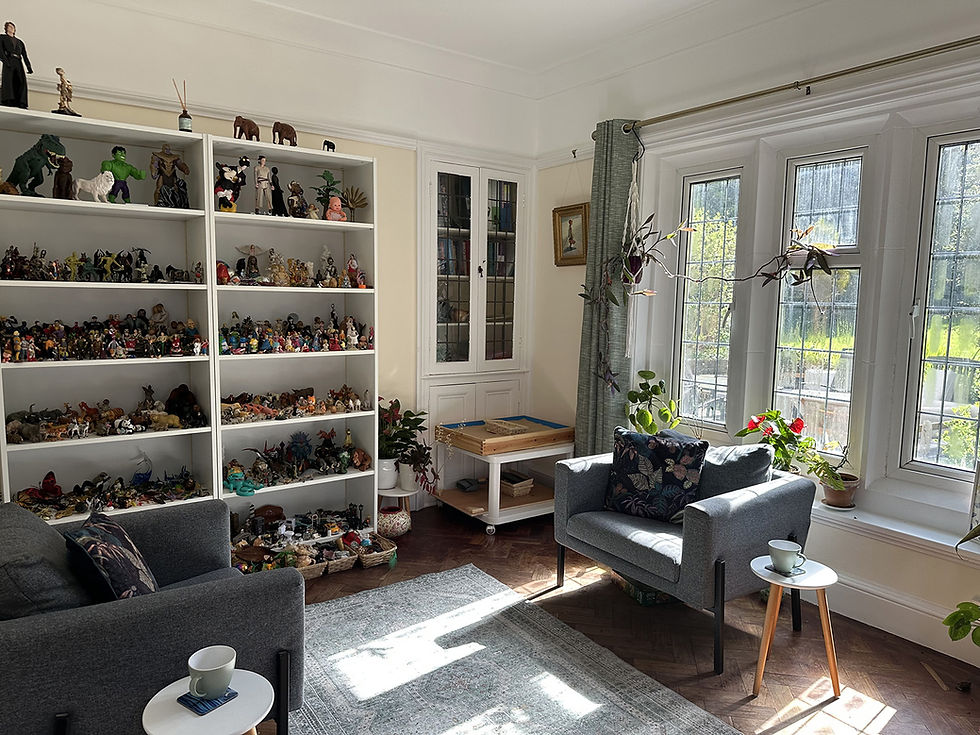
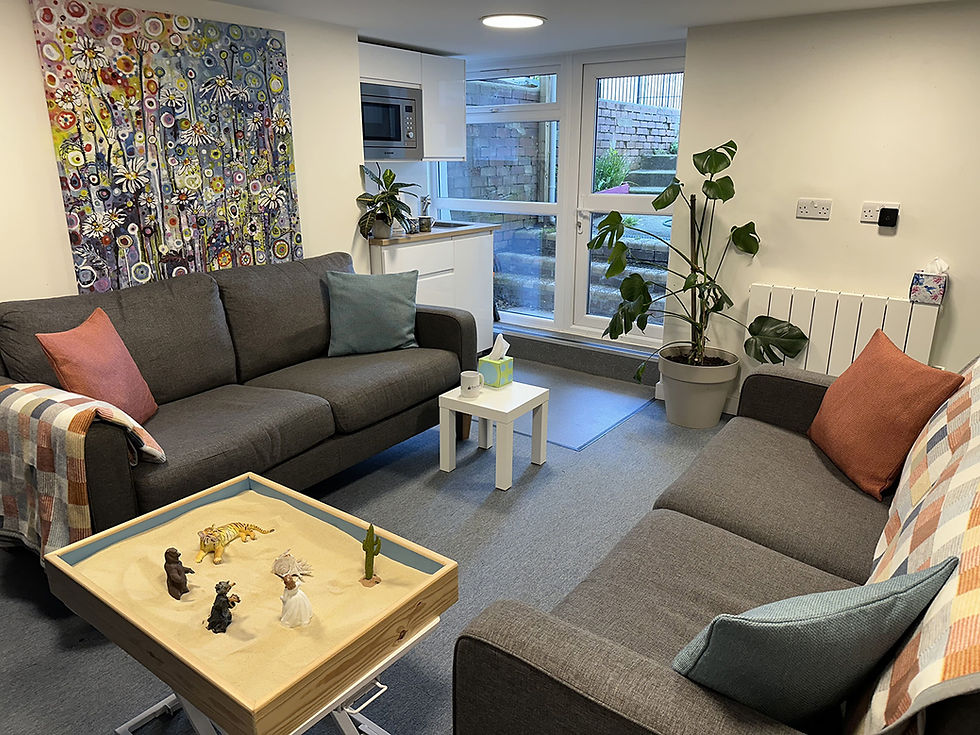
I work integratively, which means I draw from different approaches depending on what's most useful for you. For some people that's talking things through — exploring what's happened, how it's shaped them, and what they'd like to be different. For others, especially when feelings are hard to put into words, I offer sand tray therapy: a creative and visual way of working where you use figures and a tray of sand to represent something of your inner world. It can be surprisingly clarifying.
Both approaches offer the same thing at their core: a safe space to slow down and make sense of what you're carrying.
"But is my reason big enough?"
I want to address this directly, because it stops a lot of people from reaching out.
There is no hierarchy of problems that makes one person more deserving of support than another. Grief doesn't have to be recent to be valid. Anxiety doesn't have to be debilitating. A difficult childhood doesn't have to have been dramatic. Your experience is your experience - and if it's affecting your life, it's worth taking seriously.
Counselling isn't a last resort. It's a practical tool, and there's no wrong time to use it.
A note on timing
People sometimes wait until things get bad enough before they consider therapy. I understand that impulse - it can feel self-indulgent to seek support before you're in a real crisis. But in my experience, earlier is almost always better. The longer something goes unexamined, the more entrenched it tends to become.
If something has been nagging at you, that's worth paying attention to.
If you're based in Torquay or Torbay
I work with adults in Torquay from two practice rooms in Babbacombe and Wellswood, and online via Zoom for clients across the UK.
The first step is a free 30-minute conversation, no obligation. We use the time to talk about what's brought you here, how I work, and whether it feels like a good fit. There's no pressure to go any further than that.
If you've been sitting with the question of whether to reach out, this is a gentle nudge to go ahead.
Kate Renton is a BACP registered counsellor based in Babbacombe, Torquay. She offers in-person counselling, online counselling, and sand tray therapy to adults across Torbay and the UK.

Comments